

I’ve been thinking a lot lately about what it actually means to prepare our kids for real life.
Not in a big, dramatic way. Just… practically. Because my husband spent years working on a college campus, and the stories he’d come home with were eye-opening. Eighteen-year-olds who genuinely struggled to heat up food. Young adults who had never done their own laundry. Kids who were smart and kind and totally unprepared for the basic rhythms of taking care of themselves.
That stuck with me.
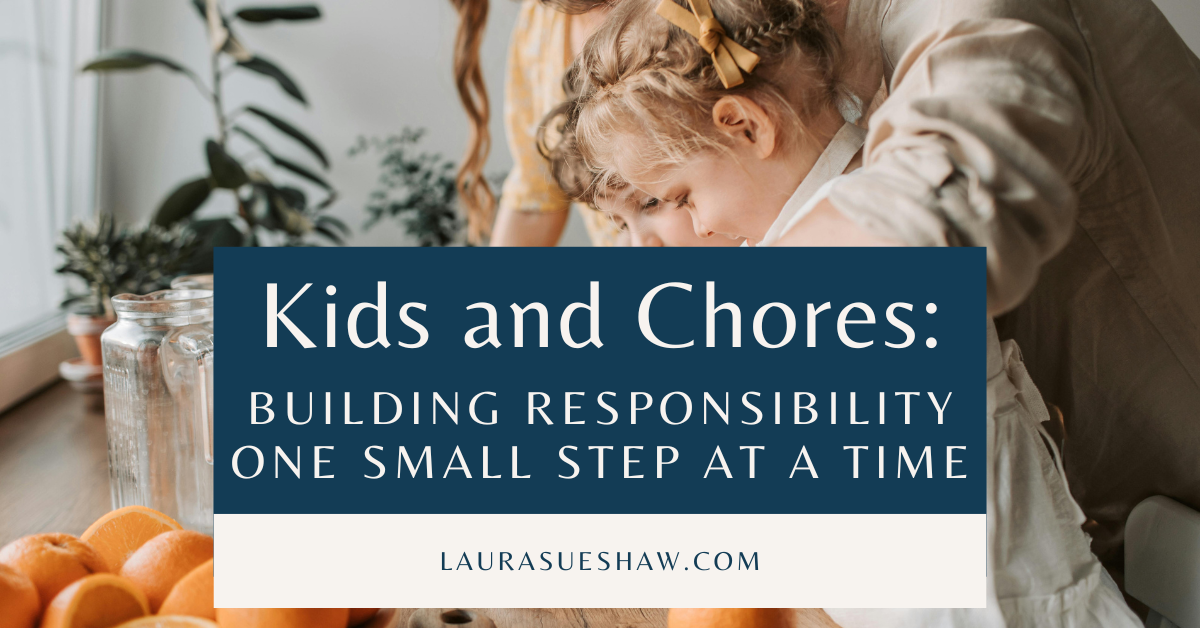
So when it comes to chores in our house, that’s kind of the backdrop. Not perfection. Not a Pinterest-worthy chore chart. Just a slow, steady effort to make sure our kids understand that our home is something we all take care of together.
It’s not just about age, it’s about your child
You’ll find a lot of lists online about what’s “age appropriate” for chores. And they’re helpful as a starting point. But what I’ve come to realize is that with our kids, especially our neurodiverse kids, the better question is: what’s developmentally appropriate for this child, right now?
Some kids are ready to take on more at four. Others need more time, more support, more repetition before something becomes routine. And that’s okay. Figuring that out for each of my kids has honestly been one of the more humbling parts of motherhood.
The goal isn’t to follow a chart. It’s to notice where each kid is, meet them there, and slowly add one more small thing.
What’s the difference between age-appropriate and developmentally appropriate chores? Age-appropriate chores are based on what children can typically do at a given age. Developmentally appropriate chores go further, accounting for each child’s readiness, sensory needs, attention, and learning style. For neurodiverse children especially, this distinction matters a lot.
Two kinds of chores, two different purposes
Something that’s helped us is thinking about chores in two categories.
The first is just… responsibility. Things that are part of being in our family. Putting your clothes away. Helping clear the table. Cleaning up after yourself. These aren’t optional, and they’re not paid. They’re just part of how we live together.
The second is what I think of as paid chores, things that go a little above and beyond the everyday. Cleaning out from under the couch. Clearing out the car. Tackling the mudroom. These are bigger, less frequent tasks, and they’re a chance to teach something different: how work and money connect. How effort has value. How to save toward something, or choose to spend.
Neither category is more important than the other. They’re just teaching different things.
What we’re actually doing right now
In our house, the current rhythm includes kids helping with putting clothes away, trash, dishes, and general clean-up. Nothing elaborate. Just the everyday stuff that keeps a home running.
And honestly, some days it goes smoothly and some days it really doesn’t. That’s just real life with kids.
What I’ve noticed, though, is that starting early made a difference. My one-year-old loves handing me things while I unload the dishwasher. It’s not efficient. It takes longer. But something is being built there, some understanding that this is what we do, we all pitch in.
In the earlier years, dusting and putting away laundry were easy wins. A little older, and we added trash, feeding pets, sweeping, and help with dishes. The progression is slow and imperfect, but it’s moving forward.
It’s about more than the chores themselves
Here’s what I keep coming back to: the goal isn’t a clean house. The goal is capable kids.
Kids who know how to take care of a space. Who understand that messes don’t clean themselves. Who have the confidence that comes from actually doing things, real things, not just being managed and directed through life.
When I think about the 18-year-olds my husband described, I don’t think their parents were bad parents. I think they were probably doing what felt kind, doing things for their kids instead of alongside them. I understand that impulse completely.
But there’s something that shifts when kids are invited into the work of the home. It changes how they see themselves in it.
Progress counts, even when it’s slow
If you have neurodiverse kids, or kids who resist, or kids who are in a hard season, you know this isn’t always straightforward. We’re still figuring out what works for each of ours. Some tasks click, some don’t. Some days we’re consistent, some days we let it go.
But we’re making progress, and that’s what matters.
Not a perfect system. Not a flawless chore chart. Just a slow, steady belief that our kids can do more than we sometimes give them credit for, and that the home is a good place to start showing them that.
What does this look like in your house right now? I’d love to hear where you are in the process.
Key Takeaways:
- Developmentally appropriate matters more than age-appropriate, especially for neurodiverse kids
- Two categories: unpaid responsibility chores (family participation) and paid chores (teaching work and money)
- Starting early builds understanding, even with a one-year-old
- The goal is capable kids, not a perfectly clean home
- Progress over perfection, always
FAQ:
At what age should kids start doing chores? There’s no single right answer. Many kids can begin participating in simple tasks like picking up toys or handing items during cleanup as early as 12-18 months. The key is meeting each child where they are developmentally rather than following a strict age chart.
Should kids be paid for chores? It depends on the type of chore. Basic responsibilities (part of being in the family) don’t need to be paid. But larger, extra tasks are a natural opportunity to teach how effort, earning, and money connect in real life.
What if my child resists helping with chores? Resistance is normal, especially with neurodiverse kids or during hard seasons. Focus on small, manageable tasks, participate alongside them rather than directing from a distance, and keep expectations flexible. Progress is more valuable than consistency.
How do I know if a chore is right for my child? Watch for whether your child can attempt the task without becoming overwhelmed or frustrated. If it takes significant scaffolding every time, it may not be the right fit yet. Scale back and try again in a few weeks or months.